Home >    Life Stages :    Children & Teens    Women    Men      

Calcium is an essential mineral to life. It is the most abundant mineral in your body and is necessary for bone initiation and growth in the developing fetus and throughout life to maintain optimal bone health and structure.

While calcium is often linked to bone health and its importance to optimal bone health cannot be over-emphasized, there are other important functions for calcium during a woman’s life. Calcium helps the body by aiding muscle contraction and relaxation, blood coagulation and nerve impulse transmission. Unfortunately, approximately 75% of American women do not obtain the recommended amount of calcium in their diet to help maintain healthy bone structure. To enlighten and encourage women during their life to learn about calcium, it is helpful to review the various aspects of calcium's function throughout the life stages. Therefore, use this section to learn more about how calcium affects various life stages, including medications and diseases.

The average woman’s bone mass reaches maximum density somewhere between the ages of 25 and 35. At age 35, it begins to decrease, picking up speed during the first five years following menopause. Although the consequences of osteoporosis are more evident in postmenopausal women, loss of bone density actually begins in the perimenopausal years.

Recommended intake varies by age, but calcium remains essential throughout every stage of life. Teenagers, young women and post-menopausal women in particular are consuming far less calcium than is healthy … and less than their bodies’ needs.

Pregnancy

No matter what age a woman is when she becomes pregnant, calcium is very important to both the mother and the baby. Calcium from the mother's body is used by the developing baby, putting increased demands on the mother's supply. During pregnancy, calcium transfer from mother to developing baby reaches 270 mg daily, on average, by the third trimester. Additional calcium may be needed for both mother's and baby's health.

A recent analysis of 14 scientific studies, published in the Journal of the American Medical Association, found that women with initially who took about 1,500 mg of 2,000 mg of supplemental calcium every day while they were pregnant had a significantly lower risk of preeclampsia, a leading cause of premature birth.

Preeclampsia is a disorder that occurs during pregnancy and affects both the mother and the developing baby. Affecting at least 5-8% of all pregnancies, it is a rapidly progressive condition characterized by high blood pressure and the presence of protein in the urine. It can possibly result in serious consequences for both mother and child.

Moreover, research also demonstrates that pregnant women with low dietary calcium consumption who were supplemented with calcium during their second and third trimesters gave birth to babies who had a 15-percent increase in bone mineral content over children whose mothers were given a placebo during pregnancy. The babies of mothers who were getting adequate daily dietary calcium showed no significant difference in fetal bone content between the treatment group and the placebo group.

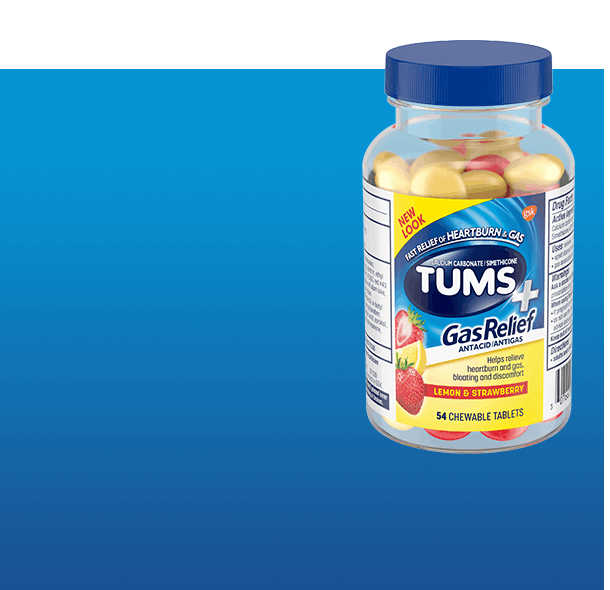
The majority of pregnant women don't get the recommended daily allowance of calcium. Expectant mothers should talk to their doctors about taking a calcium supplement like TUMS® if they don’t get enough calcium through their diet.

Why should a woman take extra calcium if she’s pregnant and already taking a prenatal vitamin?

Most prenatal formulas contain only about 200 mg of calcium and pregnant women need as much as 1,500 mg per day. Generally, one should not supplement more than 600 mg at one time. We recommend two TUMS® E-X tablets taken twice daily with meals. TUMS® is the daily calcium supplement recommended by most doctors, as well as a safe and effective treatment for heartburn during pregnancy.

How long should pregnant women take calcium?


The average American woman is likely to be calcium deficient both before and after pregnancy. Moreover, post-pregnancy dieting has been shown in certain studies to be accompanied by a significant decrease in bone mineral density.

The benefits of calcium supplementation are not limited to pregnancy and women can continue to supplement with calcium every day throughout their lifetime if their diets do not provide the recommended intake level of calcium. When a baby is nursing, however, there is a high calcium demand, and to produce the most nutritious milk, the breastfeeding woman will need a highly nutritious diet, rich in calcium.

Lactating / Breastfeeding

Breast milk is an excellent food source for the infant, containing essential healthy nutrients and immune factors. The production of breast milk by the mother requires significant energy and nutrients. It is estimated that an additional 500 calories per day are needed for women who breast feed. It is often recommended to continue the use of prenatal vitamins during lactation. Since prenatal vitamins do not include the total recommended daily amount of calcium, one must be aware of the need for additional supplementation of this important mineral. Click here to learn about calcium requirements and how to take calcium.

Birth Control

Birth control options are a necessity for many adults. A common form of contraception is DepoProvera ® (DMPA), which is an injection that prevents pregnancy for three months. It contains a progestin, a hormone that keeps the woman’s eggs from being released from her ovaries. Women who use DMPA for a long time may lose a small amount of calcium from their bones. Fortunately, most of the calcium comes back as soon as you stop using DMPA. It is prudent to ensure adequate calcium intake for women using DMPA. Read the label and talk to your doctor.

Female Athletes

Adolescent and young adult female athletes are generally very healthy. However, a sub-group of these women may be causing irreparable damage to their bodies as they excessively exercise or train for their sport. ‘The Female Athlete Triad’ is a relatively new term that describes females who excessively exercise or train for their sport too much. While weight bearing exercise is important for healthy bone development, excessive exercise can have the opposite effect on developing bone structure. Athletes who push themselves with excessive training and restrictive diets have altered menstrual patterns and bone thinning disorders. Some have said that the female athlete triad is ‘old bones in young bodies’. By over-training and under-eating, the female body goes into a ‘conservation mode’ that can lead to diminished female hormones and lack of menses. The lack of female hormones (especially estrogen) and altered diet, which often lacks sufficient calcium, can lead to very brittle bones that are prone to fracture. By educating young athletes about proper eating and training habits, this condition can be significantly reduced. Proper nutrition, including adequate calcium intake for bone development is critical.

What is the impact of diet and exercise — especially among young athletes — on the risk for osteoporosis?

A young woman or girl who wants to be thinner to enhance performance may attempt to do so through dieting and excessive exercise, thereby increasing her risk for low estrogen levels and bone loss.

Now regarded as a common and serious health problem facing young female athletes (especially gymnasts and dancers), “female athlete triad” refers to a combination of three interrelated conditions that are associated with athletic training: disordered eating (including anorexia and bulimia), amenorrhea (absence or irregular menstruation) and osteoporosis, leading to unusual or frequent stress fractures.

Not all patients have all three components of the triad and many young athletes with female athlete triad try to hide their symptoms or behavior from friends, family, trainers and/or coaches, making diagnosis difficult.

Having adequate calcium in the diet is important for achieving and maintaining optimal bone health. Studies indicate 77% of girls age 15-18 years old consumed less than two-thirds of the recommended dietary allowance of calcium. Proper nutrition, including calcium, together with regular moderate weight bearing exercise (such as. weight lifting, resistance training, running), can help protect young athletes against bone loss and enhance bone strength.

Menopause

During the menopause transition, significant bone loss can occur. In fact, during the first 3-5 years after menopause, a woman can lose significant amounts of her bone mass. This bone loss leads to more fragile bones. This can equate to bone thinning and subsequent osteoporosis, which increases the risk of fractures. Osteoporosis is thought of as a silent disease until the thinning has resulted in a fracture, which can lead to crippling pain, long recovery periods and loss of independence. According to the U.S. Surgeon General's Report, osteoporosis is a large problem in the U.S. with over 1.5 million fractures related to osteoporosis each year, including 700,000 vertebral fractures and 300,000 hip fractures. The national direct expenditures for osteoporosis fractures are estimated to be $14-17 billion annually.

Adequate calcium intake is vital to assure sufficient bone quantity, quality, and strength. Altering reversible risk factors is also important for osteoporosis prevention. Although calcium intake alone will not protect a menopausal women from osteoporosis, adequate intake will ensure that calcium deficiency is not contributing to a weakening skeletal system.

Many women are being prescribed medications for osteoporosis prevention and treatment. Medications such as Evista®, Fosamax®, Actonel® and Miacalcin® are routinely prescribed during menopause to treat osteoporosis. These medications must be taken in conjunction with adequate amounts of calcium and vitamin D for them to work effectively. As John A. Sunyecz, M.D., gynecologist and president of MenopauseRx, Inc. points out, "Just because a patient is prescribed an osteoporosis medication doesn't mean she can stop taking calcium. The situation is analogous to bricks and mortar in building a strong foundation. The prescription medication for the bones are the bricks, while calcium acts as the mortar to build the best and longest-lasting bone possible."

Colon Cancer

Colon cancer is the third most common malignancy in US women. Much research is being done on the prevention of colon polyps, which is thought to reduce the risk of colon and rectal cancer. A large study by Dr. J. Baron revealed that calcium supplementation was associated with a significant reduction in the risk of recurrent colon and rectal polyps(1). This study used 1200 milligrams of calcium over a four-year period and found a 15% reduction in polyp recurrence. This reduction was seen within the first year of the study. Other studies have also revealed positive benefits from calcium supplementation and polyp protection. Therefore, consuming an adequate amount of calcium for optimal ‘bone health’ may also give protection from colon and rectal malignancies.
Further analysis of the data from the Dr. Baron study revealed continued optimism regarding calcium and colon cancer prevention. In this study, 803 men and women who had a prior colon polyp were given calcium (1200 milligrams) or placebo and followed for 4 years. The investigators measured levels of vitamin D in the study participants and found that the benefit of calcium on polyp prevention was seen in individuals with higher levels of vitamin D(2).

A new study by the American Cancer Society shows calcium may lower the risk of colon cancer for both men and women, while vitamin D might help cut risk in men. The effect was strongest in people who took supplements, rather than getting these nutrients from foods. McCullough and her colleagues studied more than 60,000 men and more than 66,000 women who were already participating in an American Cancer Society study of nutrition and cancer prevention. The participants were all between 50 and 74-years old when they enrolled in the study in 1992 and 1993. People who took calcium supplements had about a 30% lower risk of developing colon cancer than people who did not take supplements(3).

In the future, more studies are needed to determine the exact amount of calcium and vitamin D needed for colon cancer prevention.

References

  1. Calcium Supplements for the Prevention of Colorectal Adenomas
    Baron, J.A., et al. N Engl J Med 1999; 340: 101-7.
  2. Grau MV, Baron JA, Sandler RS, et al. Vitamin D, calcium supplementation, and colorectal adenomas : Results of a randomized trial. J Natl Cancer Inst 2003;23:1765-71.
  3. Cancer Causes and Control (Vol. 14, No. 1: 1-12). http://www.cancer.org/docroot/NWS/content/NWS_2_1x_Study_Calcium_
    May_Reduce_Risk_Of_Colon_Cancer.asp


How much Calcium do you need?
Calcium Calculator

Use the Calcium CalculatorSM to estimate your current daily calcium intake, and learn about sources of calcium to help you achieve your recommended daily intake.